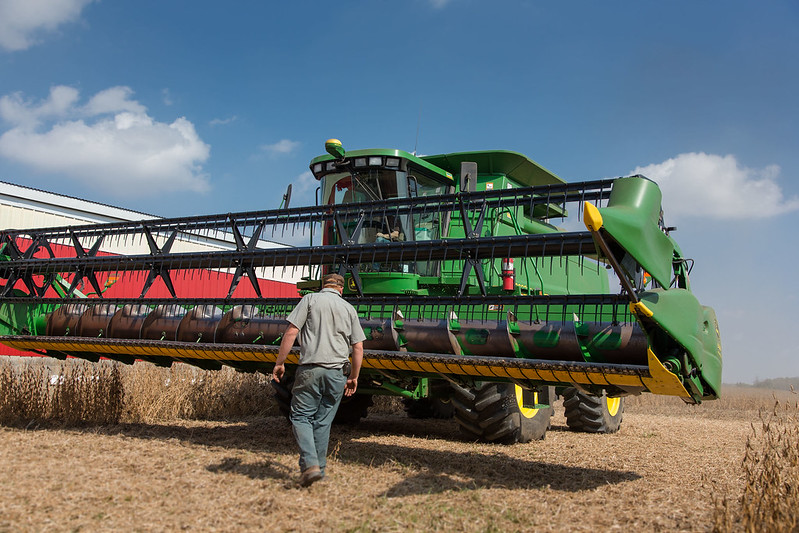

All plants require certain nutrients to grow. While most plants attain their nutrients from the soil, soybeans are a unique type of plant called a legume that are able to obtain nitrogen from the atmosphere. Soybeans do this by forming a mutually beneficial relationship with a certain bacterium in their root nodules. The bacterium convert the nitrogen to a plant-soluble form and in return are supplied with carbohydrates. Many farmers choose to plant soybeans because soybeans require less nitrogen fertilizer and help restore the important nutrient to the field. After harvest, farmers may choose to plant a crop like winter wheat, which requires high quantities of nitrogen.
Selecting Seed
Like many field crops, soybeans are grown from seed in the field from a previous harvest. The soybean seeds are mature soybeans that are cleaned and bagged specifically for use as seed. Farmers select seed based on desirable plant characteristics, like high yield, ability to withstand drought, color, or ability to withstand wind and weather.
Planting
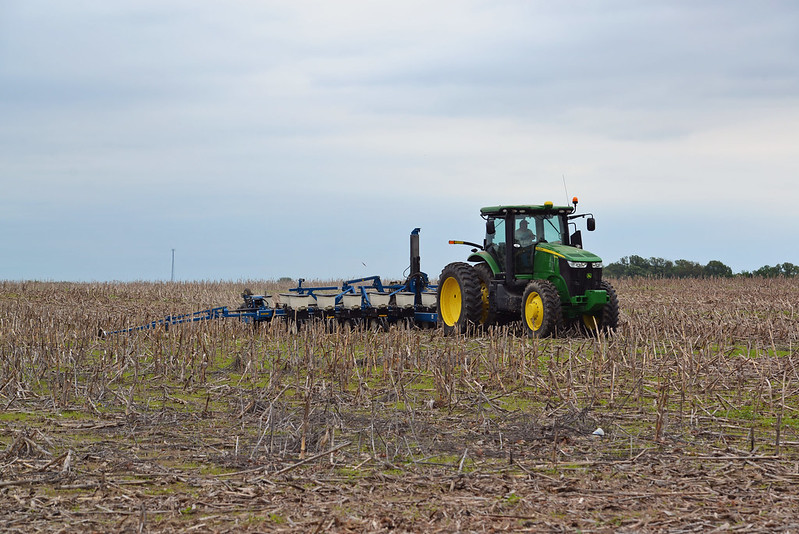
In North Carolina, farmers plant soybeans beginning in May and as late as July. Seed may be planted in cultivated or tilled land by a tractor and a planter which deposits the soybean seed about 1 1⁄2 inches deep in rows that are up to 30 inches apart. There is no rule about how wide rows must be, but 30 inches is typical.
Alternatively, soybeans may be “drilled” into the ground in seven-inch rows by a special “no-till” planter. When a farmer uses the no-till method, the land is not cultivated and the seeds are planted directly into the stubble left over from the previous crop, such as wheat harvested in May or June. The no-till method saves time, conserves soil moisture and greatly decreases the possibility of soil erosion. No-till is highly desirable, but if farmers are dealing with fields infested by weeds or other pests, till may be necessary to eradicate the pest.

Growth
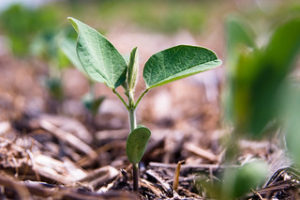
Soybeans sprout about four to seven days after planting. At his point, the farmer has already invested heavily in seed, pest controls, and operation costs, so there are many things a farmer must consider to protect his crop. Bugs and worms really like small tender plants, so when the farmer notices there is a heavy insect infestation, he or she must calculate the degree of risk to the crop. If the infestation is bad enough to harm the crop, the farmer sprays a pesticide to control the pest. If the farmer is using organic methods, there are still products that can be sprayed but the choice is much more limited, and the risk is somewhat greater.
Weed that will inhibit soybean growth
Another threat to the young crop comes from weeds that grow faster than soybean plants. They can crowd out the soybean plants and prevent necessary sunlight and nutrients from enabling the soybean plants to grow. This will reduce the soybean yield. If allowed to grow, some weeds will produce seeds that will be harvested with the soybeans and will reduce the value. The farmer will get less money when they sell the crop post-harvest.
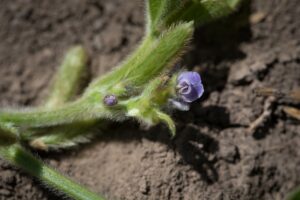
Soybean plant flowering
In July, August and September, the plants bloom. The flowers are small and vary from a white to a beautiful violet or purple. From these blossoms, the soybean plant grows small pods that contain the young seeds. The soybean is a self-pollinating plant, which means that each flower has male and female parts. A single plant can produce seed and essentially clone itself. Soybean plants produce many more flowers than they need, so many flowers never produce pods. Soybeans are a deep green with a slightly paler shade of silver-green on the underside of the leaf.
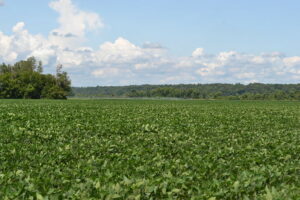
Soybean Field
About 75% of North Carolina soybeans are grown in the eastern part of the state, and if you are driving in this part of the state in the summer and early fall, you are sure to see some soybeans. To learn more about where and how many soybeans are produced in N.C., check the NC Department of Agriculture & Consumer Services annual Agricultural Statistics book.
Harvest
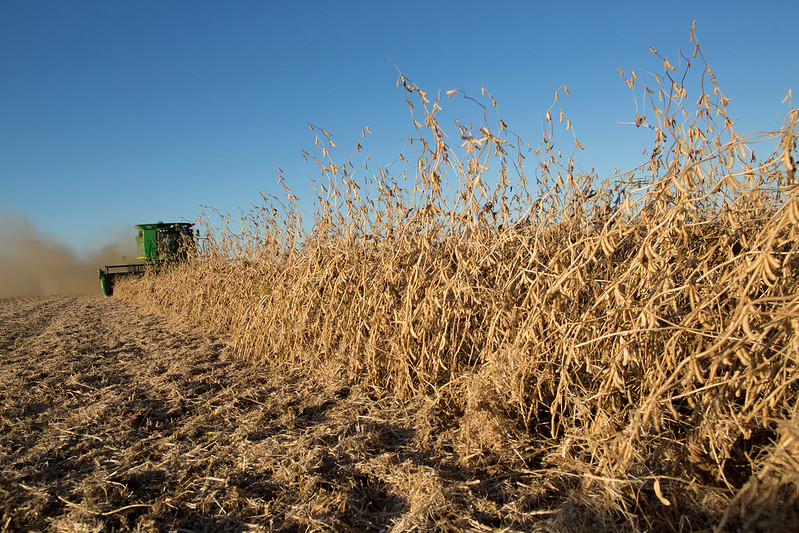
In late September, the soybeans begin to mature. As the days get shorter and the temperatures get cooler, the leaves on soybean plants begin to turn yellow. By mid-October and November, the leaves will turn brown and fall off, exposing the matured pods of soybeans. The soybeans are now ready to be harvested.
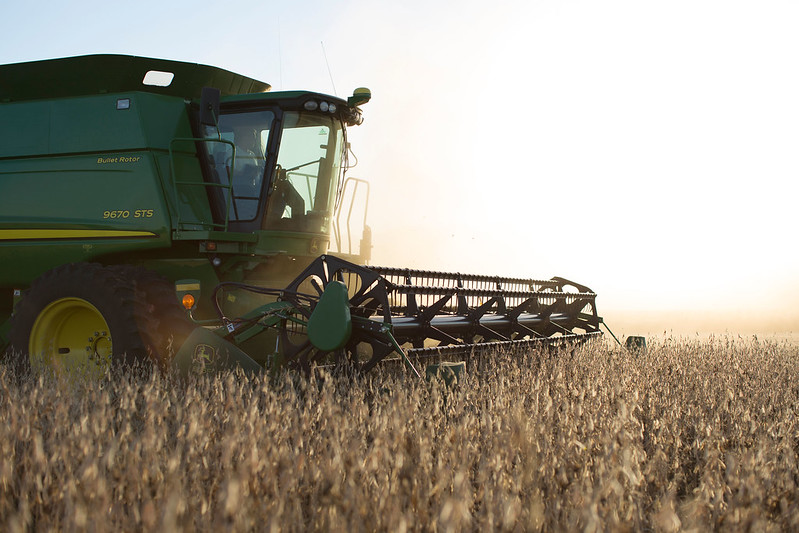
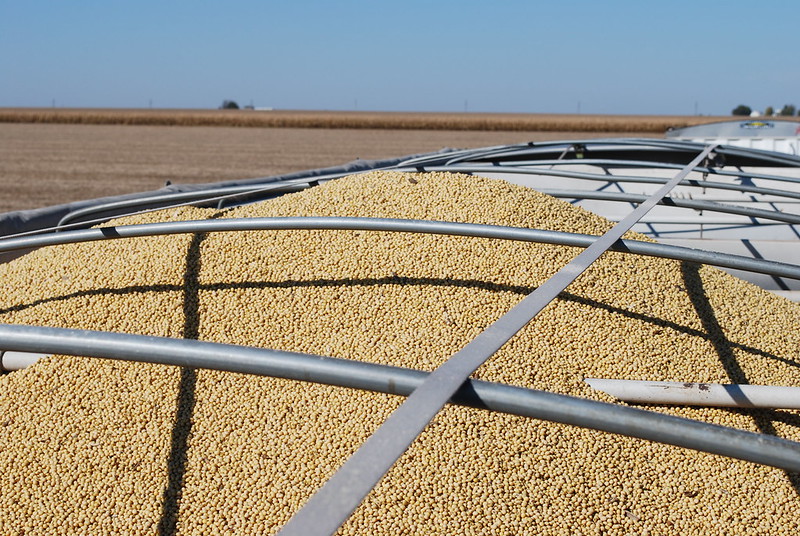
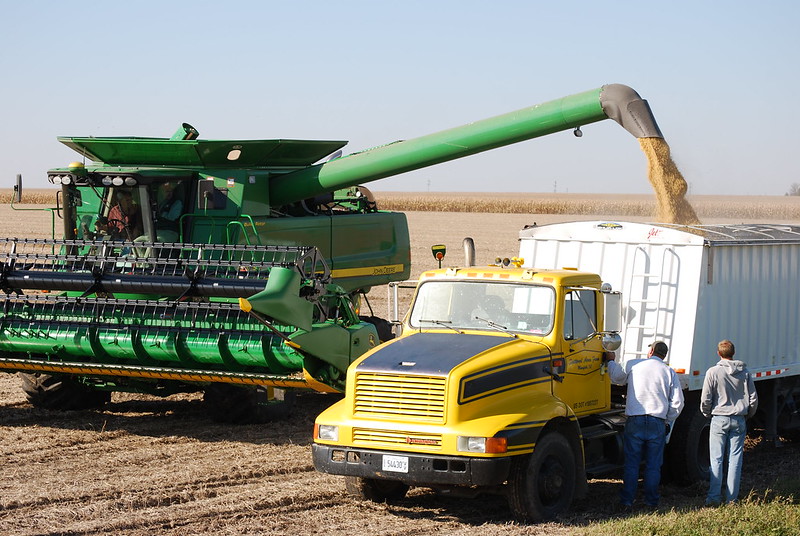
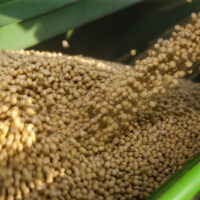
Combines are large machines for harvesting soybeans and other grains including corn and wheat. The header on the front of the combine cuts and collects the soybean plants. The combine separates the soybeans from their pods and stems and collects the soybeans into a holding tank in the back of the combine. When the tank is full, the combine operator will empty the soybeans into a grain truck or grain wagon.
Soybeans are either taken directly to a grain dealer in the grain trucks or they are taken to storage facilities and stored until the farmer decides to sell them. Ultimately the soybeans are transported to a processing plant where the soybean meal (the protein component of the bean) is separated from the soy oil components.