

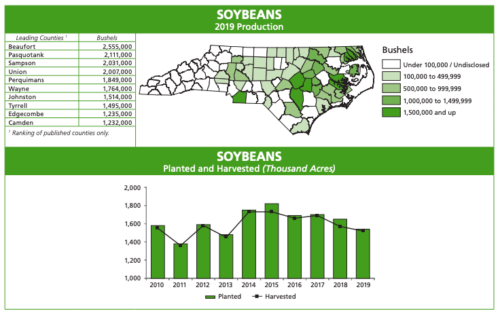
North Carolina farmers plant soybeans in all 100 counties in the state from the mountains to the sea. Most soybean acres, however, are in the eastern part of the state in the coastal plain. Leading producing counties include Robeson, Beaufort, Pitt, Sampson, Pasquotank, Wayne, Duplin, and Johnston counties. At 1.6 million acres in an average year, soybeans have the biggest footprint of any crop in the state. In a good year, the crop is worth as much as $800 million to farmers.
Geographic Distribution
Farm Ownership
- Family/Individual
- Partnership
- Incorporated
- Other
Because soybeans work well in rotation with other crops like tobacco and can be planted in the same field in the same year following the winter wheat crop, it is a very popular crop with farmers. Despite popular misconception, roughly 87% of farms in North Carolina are family/individually own. These families are dedicated to producing the highest quality soybean for the consumer and take extra care protecting the land on which their livelihood depends.
Commodity Influence in NC
Soybeans ranked in the top 5 commodities by cash receipts in North Carolina in 2019. To continue researching NC Agricultural Statistics click learn more!
