
USDA Announces WHIP+
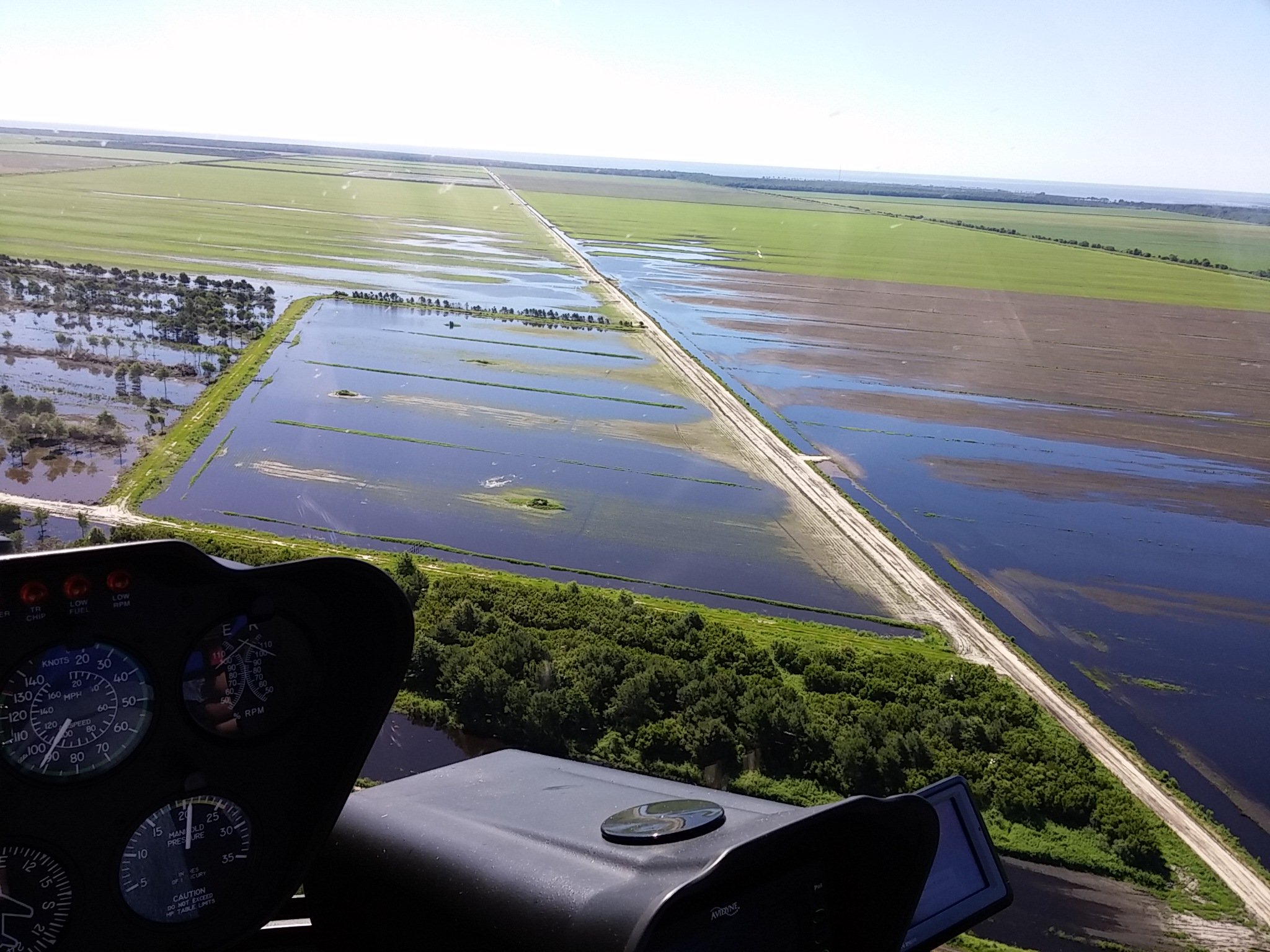
The U.S. Department of Agriculture announced this week that producers who have been affected by 2018 & 2019 natural disasters will now be able to apply for assistance through the Wildfire and Hurricane Indemnity Program Plus (WHIP+). The program’s creation was authorized by the Supplemental Relief Act of 2019 passed by Congress and signed by President Trump at the beginning of June; $3 billion being set aside for agricultural assistance. The disaster package was created after the South experienced a brutal 2018 hurricane season and was finally moved through after the Midwest experienced flooding this spring. Growers and livestock producers who were affected by Hurricane Dorian are also able to apply for assistance through WHIP+.
Signups will begin on September 11, 2019 through your local Farm Service Agency Office (FSA). The program is designed to build on the success of 2017 WHIP while covering losses for milk dumped, losses of stored commodities and prevented planting supplemental disaster payments. Producers who did not insure their crops in 2018 or 2019 will receive 70 percent of the expected value of the crop. Insured crops (either crop insurance or NAP coverage) will receive between 75 percent and 95 percent of expected value; those who purchased the highest levels of coverage will receive 95-percent of the expected value.
Below is USDA’s press release on eligibility, payment limitations and other parts of the program. You can also find the press release here.
ELIGIBILITY
WHIP+ will be available for eligible producers who have suffered eligible losses of certain crops, trees, bushes or vines in counties with a Presidential Emergency Disaster Declaration or a Secretarial Disaster Designation (primary counties only). Disaster losses must have been a result of hurricanes, floods, tornadoes, typhoons, volcanic activity, snowstorms or wildfires that occurred in 2018 or 2019. Also, producers in counties that did not receive a disaster declaration or designation may still apply for WHIP+ but must provide supporting documentation to establish that the crops were directly affected by a qualifying disaster loss.
A list of counties that received qualifying disaster declarationsand designations is available at farmers.gov/recover/whip-plus.Because grazing and livestock losses, other than milk losses, are covered byother disaster recovery programs offered through USDA’s Farm Service Agency(FSA), those losses are not eligible for WHIP+.
GENERAL ELIGIBILITY AND PAYMENT LIMITATIONS
WHIP+ is only designed to provide assistance for productionlosses, however, if quality was taken into consideration under federal cropinsurance or the Noninsured Crop Disaster Assistance Program (NAP) policy,where production was further adjusted, the adjusted production will be used incalculating assistance under this program.
Eligible crops include those for which federal crop insurance orNAP coverage is available, excluding crops intended for grazing. A list ofcrops covered by crop insurance is available through USDA’s Risk ManagementAgency (RMA) Actuarial Information Browser at webapp.rma.usda.gov/apps/actuarialinformationbrowser.
Eligibility will be determined for each producer based on the size of the loss and the level of insurance coverage elected by the producer. A WHIP+ factor will be determined for each crop based on a producer’s coverage level. Producers who elected higher coverage levels will receive a higher WHIP+ factor.
[USDA is using this formula: (Expected Value of the Crop x WHIP+ Payment Factor*) – Value of Crop Harvested – Insurance Indemnity = Payment ]
The WHIP+ payment factor ranges from 75 percent to 95 percent,depending on the level of crop insurance coverage or NAP coverage that aproducer obtained for the crop. Producers who did not insure their crops in2018 or 2019 will receive 70 percent of the expected value of the crop. Insuredcrops (either crop insurance or NAP coverage) will receive between 75 percentand 95 percent of expected value; those who purchased the highest levels ofcoverage will receive 95-percent of the expected value.
Once signup begins, a producer will be asked to provide verifiableand reliable production records. If a producer is unable to provide productionrecords, WHIP+ payments will be determined based on the lower of either theactual loss certified by the producer and determined acceptable by FSA or thecounty expected yield and county disaster yield. The county disaster yield isthe production that a producer would have been expected to make based on theeligible disaster conditions in the county.
WHIP+ payments for 2018 disasters will be eligible for 100 percent of their calculated value. WHIP+ payments for 2019 disasters will be limited to an initial 50 percent of their calculated value, with an opportunity to receive up to the remaining 50 percent after January 1, 2020, if sufficient funding remains. Importantly, this cap on 2019 payments represents a clear win for NC growers impacted by Florence, which would have otherwise risked the $3 billion in funding being spread very think by prevent-plant claims on 2019 Midwest acres.
WHIP+ benefits will be subject to a payment limitation of either$125,000 or $250,000 per crop year, depending upon their verified averageadjusted gross income. As under 2017 WHIP, the payment limitation for WHIP+factors in the person’s or legal entity’s income from activities related to farming,ranching, or forestry. Specifically, a person or legal entity, other than ajoint venture or general partnership, cannot receive more than $125,000 inpayments under WHIP+, if their average adjusted gross farm income is less than75 percent of their average adjusted gross income (AGI) for 2015, 2016, and2017. The $125,000 payment limitation is single total combined limitation forpayments for the 2018, 2019, and 2020 crop years. However, if at least 75percent of the person or legal entity’s average AGI is derived from farming,ranching, or forestry related activities and the participant provides therequired certification and documentation, the person or legal entity, otherthan a joint venture or general partnership, is eligible to receive, directlyor indirectly, up to $250,000 per crop year in WHIP+ payments, with a totalcombined limitation for payments for the 2018, 2019, and 2020 crop years of$500,000. The relevant tax years for establishing a producer’s AGI andpercentage derived from farming, ranching, or forestry related activities forWHIP+ are 2015, 2016, and 2017. For information regarding the paymentlimitation that applies to WHIP+, please contact your local USDA service centeror visit farmers.gov/recover.
PREVENTED PLANTING
Agricultural producers faced significant challenges planting cropsin 2019 in many parts of the country. All producers with flooding or excessmoisture-related prevented planting insurance claims in calendar year 2019 willreceive a prevented planting supplemental disaster (“bonus”) payment equal to10 percent of their prevented planting indemnity, plus an additional 5 percentwill be provided to those who purchased harvest price option coverage.
As under 2017 WHIP, WHIP+ will provide prevented planting assistance to uninsured producers, NAP producers and producers who may have been prevented from planting an insured crop in the 2018 crop year and those 2019 crops that had a final planting date prior to January 1, 2019.
FUTURE INSURANCE COVERAGE REQUIREMENTS
Both insured and uninsured producers are eligible to apply forWHIP+. But all producers receiving WHIP+ payments will be required to purchasecrop insurance or NAP, at the 60 percent coverage level or higher, for the nexttwo available, consecutive crop years after the crop year for which WHIP+payments were paid. Producers who fail to purchase crop insurance for the nexttwo applicable, consecutive years will be required to pay back the WHIP+payment.
ADDITIONAL LOSS COVERAGE
The Milk Loss Program will provide payments to eligible dairyoperations for milk that was dumped or removed without compensation from thecommercial milk market because of a qualifying 2018 and 2019 natural disaster.Producers who suffered losses of harvested commodities, including hay, storedin on-farm structures in 2018 and 2019 will receive assistance through theOn-Farm Storage Loss Program.
Additionally, the disaster relief measure expanded coverage of the2017 WHIP to include losses from Tropical Storm Cindy, and peach and blueberrycrop losses that resulted from extreme cold.
ENHANCED ASSISTANCE THROUGH TREE ASSISTANCE PROGRAM (TAP)
TAP traditionally provides cost-share for replanting andrehabilitating eligible trees. WHIP+ will provide payments based on the loss ofvalue of the tree, bush or vine itself. Therefore, eligible producers mayreceive both a TAP and a 2017 WHIP or WHIP+ payment for the same acreage.
In addition, TAP policy has been updated to assist eligibleorchardists or nursery tree growers of pecan trees with a tree mortality ratethat exceeds 7.5 percent (adjusted for normal mortality) but is less than 15percent (adjusted for normal mortality) for losses incurred during 2018.