
Who are the state legislators representing NC soybean growers?
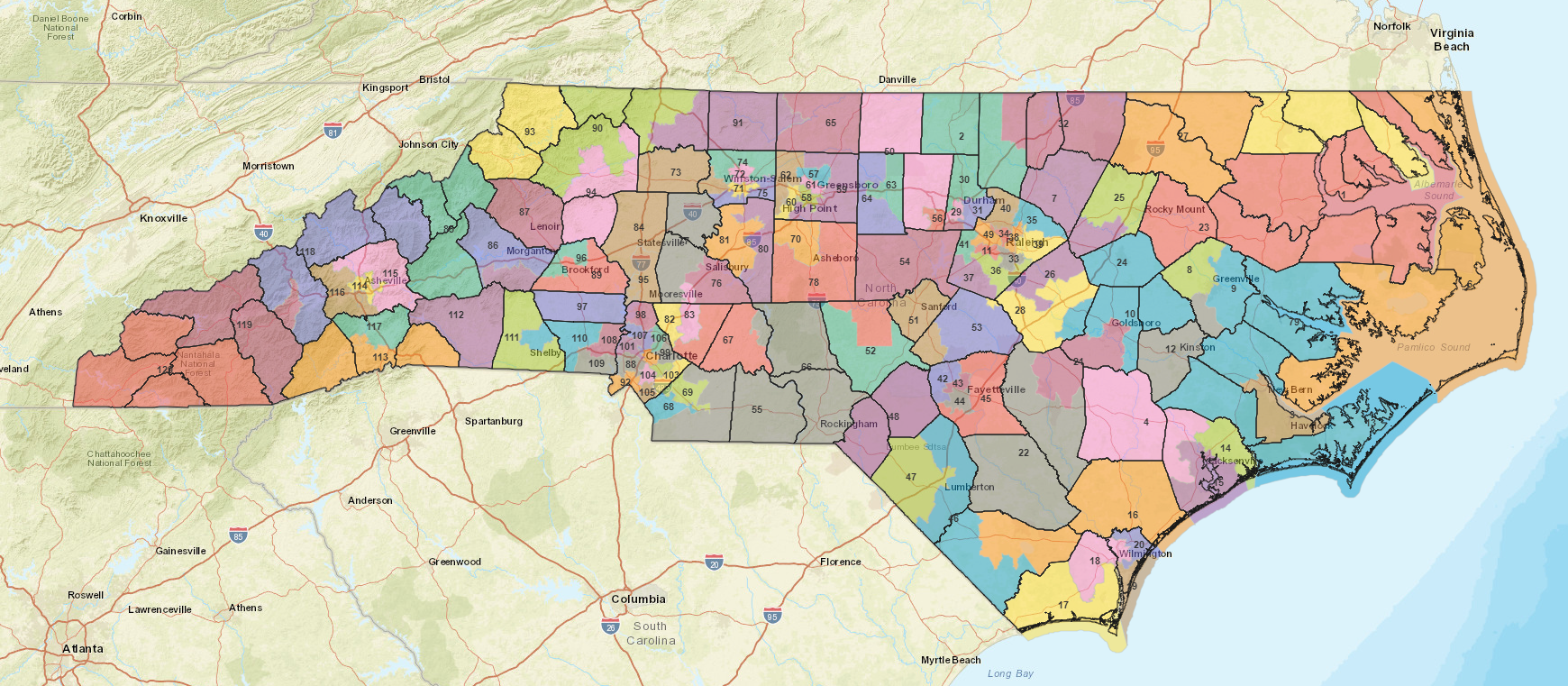
More than most industries, agriculture, because of its connection to the natural world, its essentiality to sustaining life, and its importance to the rural economy, is overseen by government policy the world over. In the United States, the institutions that may spring to mind in this context are most often Federal in nature, including entities like the USDA, which manages commodity and nutrition programs, perhaps the EPA, which sets biofuel policy and regulates agricultural chemical usage and of course the Executive and Legislative Branches, which set the macroeconomic tone, design the Farm Bill and offer disaster assistance in exceptional circumstances.
In this context, it can be easy, at times, to forget theimportance of local politics. In the past year, however, we were reminded justhow important local legislative initiatives can be. 2018, for example, broughtus hurricane Florence and Tropical Storm Michael along with a swift responsefrom the State Assembly for $240 million dollars.By comparison, the whole of the Market Facilitation Program (MFP) payments,approved by the Trump Administration and funneled to North Carolina wereestimated to be less than $200 million by American Farm Bureau Federation.
Despite being a state with a rich agricultural tradition, local policy isn’t always supportive of the sector. For a reminder, one only need to revisit the ban on CAFO hog operations in the wake of hurricane Floyd in 1997. Since then, US hog production has increased by one-third while North Carolina’s production has increased by just 3%, capping local meal demand and any premium the state’s soybean growers might otherwise enjoy.
When it comes to our outreach efforts in Raleigh, the NorthCarolina Soybean Producers Association and its partners at the legislature arecommitted to promoting the interests of the “whole farm”, not just the slicethat may have soybeans in production at any given time – an approach that bestmatches the diverse interests of the state’s growers . That said, as theleading crop in North Carolina by way of acreage, soybeans can serve as auseful proxy for agriculture in general.
While the USDA releases crop acreage by Congressional districtevery ten years as part of its agricultural census, this data is never producedfor state legislatures. As such, it is incumbent upon the North Carolinacommodity associations like this one to identify legislators that are importantto and should find importance in the soybean sector.
Approach
To determine soybean acreage by state legislative districtand state senate district we used satellite imagery available through USDA’s CropScape program. This imagery has beenpre-interpreted, meaning that soybean fields, along with most other major croptypes, have been identified by GIS professionals at USDA. At the state level,this interpreted imagery was about 85% accurate for 2018 soybeans. Once soybeanfields have been extracted from the broader crop data set, the acreages aretotaled within each 2018 legislative district. The image below, zoomed in onthe intersection of I-40 and I-95, near Benson, within House District 28 (LarryC. Strickland), gives a better sense of the approach we have taken for thisanalysis and the data involved.

Results
The top ten Legislative and State Senate districts arepresented in the tables below while full results can be downloaded in the excelfile below. For the most part, key chairs for the Agriculture, Environment andAgricultural Appropriations committees will be found among these top-producingdistrict because lawmakers tend to gravitate towards committees that are mostimportant to their constituents. Committee members and especially committeechairs play a very important role in determining what legislation becomes law.Normally, when a bill is introduced it is assigned to a committee and only ifapproved by that committee will it be put forward for consideration by the fullmembership of the body. The committee can also make changes to a bill before itis presented for broader consideration.
Top legislativedistricts by 2018 soybean acreage
Edward Goodwin   |
Keith Kidwell |
Howard Hunter  |
Brendan Jones  |
John Bell |
| District: 1 Soy acres: 189,100 Commitees: Agriculture: Environment: Member Ag. Approps: Member |
District: 79 Soy acres: 86,300 Commitees: Agriculture: Environment: Member Ag. Approps: |
District: 5 Soy acres: 85,800 Commitees: Agriculture: Vice Chair Environment: Ag. Approps: |
District: 46 Soy acres: 85,600 Commitees: Agriculture: Member Environment Ag. Approps: |
District: 1 Soy acres: 82,600 Commitees: Agriculture: Member Environment: Ag. Approps: |
Bobby Hanig |
William Brisson |
Shelly Willingham  |
Jimmy Dixon  |
Michael Wray  |
| District: 6 Soy acres: 82,10 Commitees Agriculture: Environment: Ag. Approps: |
District: 22 Soy acres: 80,400 Commitees: Agriculture: Chair Environment: Ag. Approps: |
District: 23 Soy acres: 70,200 Commitees: Agriculture: Environment: Ag. Approps: |
District: 4 Soy acres: 65,700 Commitees: Agriculture: Sr. Chair Environment: Member Ag. Approps: Sr. Chair |
District: 27 Soy acres: 61,400 Commitees: Agriculture: Vice Chair Environment: Chair Ag. Approps: Member |
Other keychairs: Pat McElraft (R, 13) –Environment and Ag. Approps., LarryYarborough (R, 2) – Ag. Approps., ChuckMcGrady (R, 117) – Environment and Ag. Approps., Destin Hall (R, 87) – Ag. Approps., Pricey Harrison (D, 61) - Environment
Top State Senatedistricts by 2018 soybean acreage
Bob Steinburg |
Brent Jackson |
Erica Smith |
Danny Earl Britt |
Toby Fitch |
| District: 1 Soy acres: 304,300 Commitees Agriculture: Member Ag. Approps: |
District: 10 Soy acres: 175,300 Commitees Agriculture: Member Ag. Approps: |
District: 3 Soy acres: 85,800 Commitees Agriculture: Vice Chair Ag. Approps: |
District: 13 Soy acres: 162,400 Commitees Agriculture: Ag. Approps: |
District: 4 Soy acres: 120,300 Commitees Agriculture: Member Ag. Approps: |
Don Davis |
Jim Perry |
Norman Sanderson |
Rick Horner |
Bill Rabon |
| District: 5 Soy acres: 107,100 Commitees Agriculture: Member Ag. Approps: |
District: 7 Soy acres: 93,600 Commitees Agriculture: Ag. Approps: |
District: 2 Soy acres: 64,600 Commitees Agriculture: Chair Ag. Approps: |
District: 11 Soy acres: 64,300 Commitees Agriculture: Ag. Approps: |
District: 8 Soy acres: 63,900 Commitees Agriculture: Ag. Approps: |
Other keychairs: Andy Wells (R, 42) – Agricultureand Ag. Approps., Rick Gunn (R, 24) –Ag. Approps., Chuck Edwards (R, 48) –Ag. Approps.,
Next steps
The North Carolina Soybean Association will be using this analysis to formulate our outreach strategy to the legislative community as well as our conversations with industry partners. In the meantime, we encourage our grower members to remind these lawmakers of the important of agriculture to their legislative districts and the importance we place in having a voice at the State Assembly.